




By Jeremy Freedman, Managing Director at Guardpack
As of 31st July 2026, cosmetic brands placing new products on the EU market must comply with updated fragrance allergen labelling requirements. While the legislation improves transparency for consumers with fragrance allergies, it also highlights the importance of treating regulatory compliance as an ongoing process.
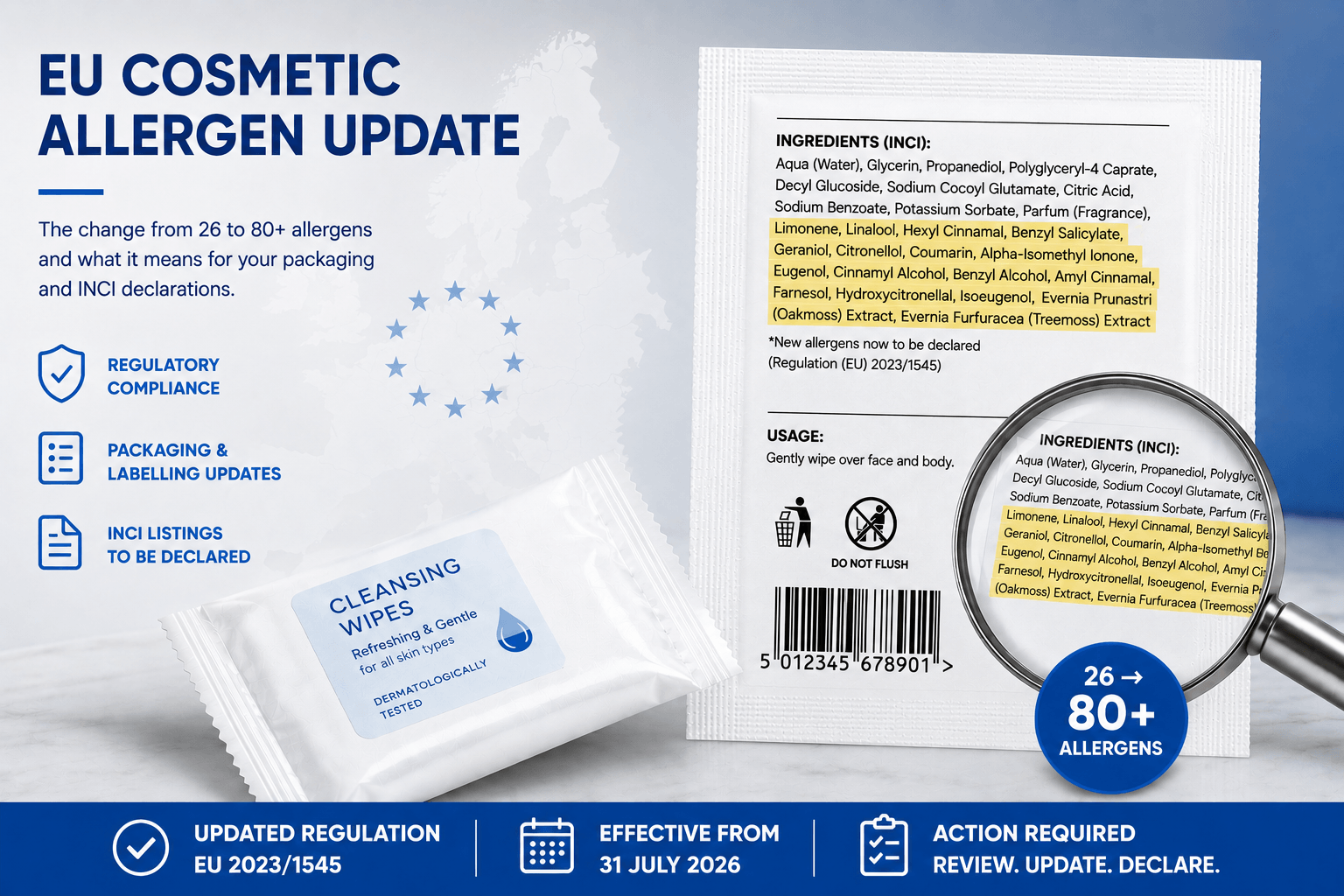
The updated rules expand the number of fragrance allergens requiring individual declaration from 24 to more than 80, following a review of emerging scientific evidence that identified additional ingredients capable of causing contact allergies. The changes also broaden the scope beyond traditional fragrance compounds to include certain oxidation products and naturally derived isolates, meaning compliance may extend beyond products that are obviously fragranced. The aim is to give consumers clearer information about the products they use while making it easier for those with fragrance allergies to identify ingredients they need to avoid.
Although the declaration thresholds remain unchanged, many brands will need to review formulations, ingredient listings and packaging to ensure products placed on the EU market comply with the new requirements.
Regulatory changes like this can have implications across product development, design approval, packaging production and supply chain planning. Even relatively minor amendments can require careful cross-coordination, so it’s important to be prepared.
Proactive compliance benefits everyone
The businesses that navigate regulatory change most effectively are often those that build compliance into their everyday processes rather than reacting when deadlines approach. We’ve observed this through our work with cosmetic manufacturers, where early conversations around packaging and compliance often make the implementation process considerably smoother.
Reviewing formulations early, planning packaging updates in advance and maintaining close collaboration between regulatory, manufacturing and packaging teams can help minimise disruption while ensuring products are ready for market.
Although these latest requirements apply to products placed on the EU market, they also reflect a wider industry shift towards greater ingredient transparency. Businesses also need to prepare for the July 2028 transition deadline, when non-compliant products already on the market must be updated or withdrawn.
As cosmetic regulations continue to evolve, taking a proactive approach allows businesses to adapt more efficiently to future changes, regardless of where their products are sold.
Preparing early offers benefits beyond meeting regulatory requirements. It provides time to review packaging, refine internal processes and ensure labelling accurately reflects product formulations before production begins. Rather than viewing regulation as an administrative burden, many businesses are recognising that early planning can improve operational efficiency while reinforcing consumer confidence.
An integral part of developing trusted products
Compliance often requires collaboration across multiple departments, so the earlier the conversations around it begin, the more time brands have to make considered decisions rather than reactive ones.
Looking ahead, cosmetic regulations will continue to evolve as scientific understanding develops and consumer expectations around transparency increase. Businesses that embed regulatory awareness into product development, rather than treating it as a one-off obligation before launch, will be better placed to adapt to future changes with confidence.
Ultimately, compliance supports product integrity, maintains consumer trust and ensures products reach the market with accurate, up-to-date information.
Share this story

September 2026 issue

2026 A1 Buyers Guide